Winning the AI for Iowa Ivy Hackathon.
AI sounds just as confident when it's wrong as when it's right.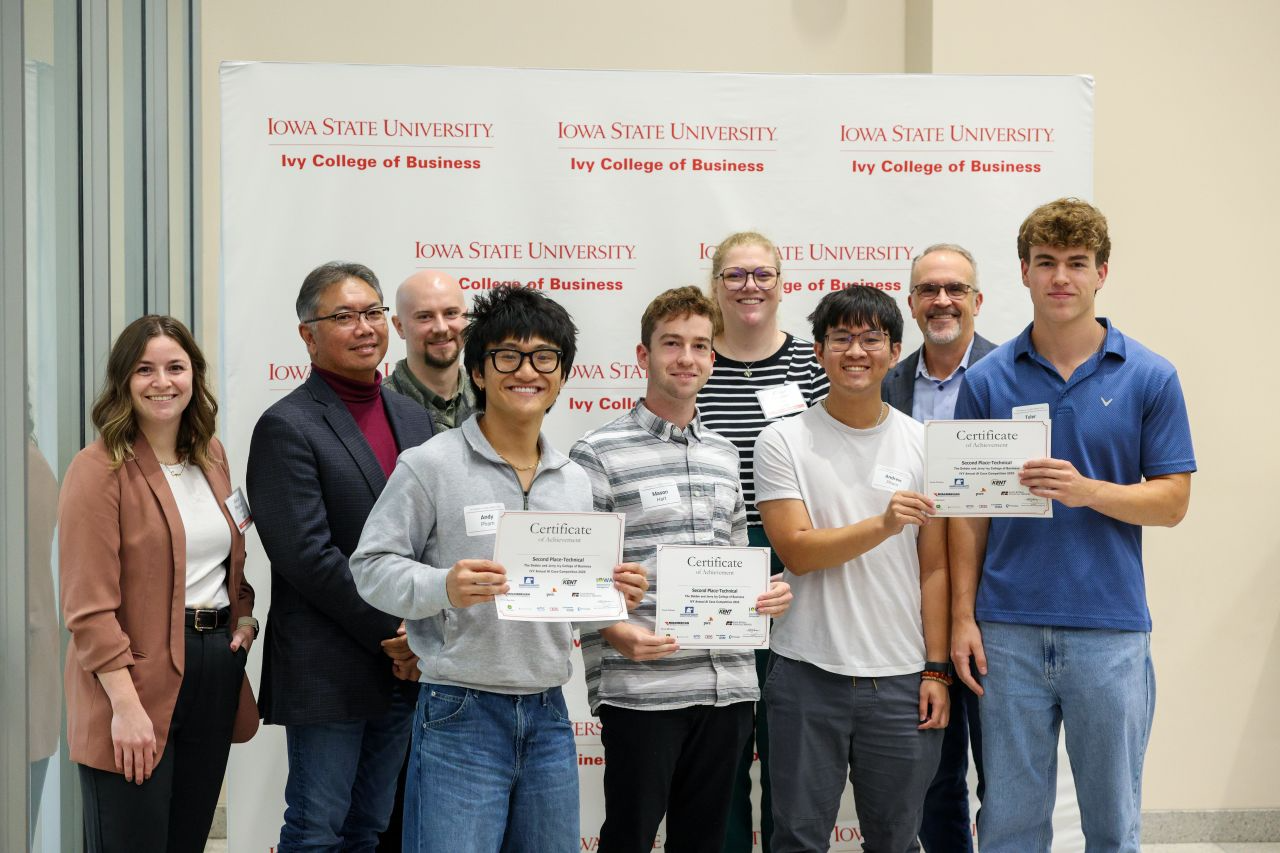
AI sounds just as confident when it's wrong as when it's right.
That problem is what our team set out to tackle at the Ivy Hackathon at ISU, where we placed 2nd in the AI for Iowa track and won $600.
Our challenge was manufacturing quotes. A customer sends a request, and a small shop has to name a price before it knows everything. The drawings are incomplete, material costs shift while the quote is still open, and quoting too high loses the job while quoting too low loses money. Small Iowa manufacturers make that call every day.
One AI producing one number wasn't going to be good enough, so we built a team of AI agents where nothing moves forward unchecked. A planner agent reads the customer request and takes it through four stages: requirements, manufacturing approach, risk, and cost. At each stage, three subagents work in parallel on different parts of the problem, and the planner merges their work into one result. Then three independent AI judges, each looking for different problems, score it. A stage passes with an average score of 7.5 or higher and no judge below 5. If it falls short, it goes back with specific fixes. After three attempts, the best version is flagged for a human to review.
For cost, we didn't let the AI do the math. Three agents estimate the job using different methods (bottom-up, per-unit, and comparison to similar past jobs). The model chooses the inputs, like material weight, machine hours, setup, and scrap, and plain code does the calculations. That makes every number reproducible and easy to defend, and it is where we built in the Iowa angle with local shop rates and regional material costs. The planner then sets the price and drafts the full quote, explaining the key decision made at each step, and three more judges review it before it is approved or revised.
Along the way, the system tells the user right away when something in the data doesn't add up, instead of quietly guessing. And if a customer changes their mind mid-quote, say 2,500 units becomes 4,000 with a shorter deadline, the manufacturer can revise the quote and the agents re-work it.
My biggest takeaway: checking the work at every step beats only checking the final answer. A wrong assumption caught early is cheap to fix. A wrong price at the end is hard to even find. That idea comes from the agent-as-a-judge research (Yu, 2025), which found that judging the whole process with a panel of differently-focused judges beats relying on a single judge.
Thank you to my teammates Mason Hart and Andy Pham. Thank you to all the organizers for putting on the Ivy Hackathon.